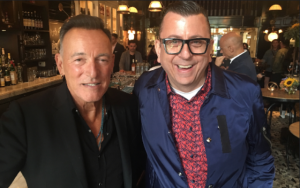
Making Bruce Springsteen laugh: I made Bruce Springsteen laugh on Thursday. We talked at a lunch for his movie “Western Stars” and I told him about my first time using a Sony Walkman. I borrowed a Walkman, used the last of my cash to buy a “Born In The USA” cassette and walked through the Eaton Centre with the thing turned up to 11. As let the music reverberated around my head I remember thinking, “This is so much easier than lugging the stereo around.” He liked the story and said, laughing, “Thanks for telling me that.” #Boss
Daniel Craig’s thick-as-gumbo accent in the stylish whodunnit “Knives Out.” As Benoit Blanc he brings a courtly charm to the role of the Southern-American Hercule Poirot. It’s worth the price of admission alone to hear his pronunciation of the word “your,” as in “Yew-our in big trouble now.”
Star selfies: Often my favorite things don’t take place on the stage or screen. I like the smaller, intimate moments that add a sense of normalcy to the chaos that reigns over the festival. This year, backstage at the press conference for “Blackbird” I watched Susan Sarandon, Sam Neill and Rainn Wilson goof it up for a selfie on the actress’s phone. It was a nice, unscripted moment at an event often built on artifice. Later Sarandon glammed it up, taking off her reading glasses in favour of dark sunglasses for an official photo shoot.
Willem DaFoe’s beard in “The Lighthouse.” The actor embodies the craggy old character who has spent his life on the ocean or at the watchtower, looking like a Royal Doulton Old Salt mug come to life, speaking like a character right out of Melville. You can almost smell the rum breath, filtered through a beard that would make Captain Morgan jealous.
The timely commentary of “Joker.” Although ripe with elements from older movies like “Death Wish,” the God’s lonely man favorites “Mean Streets” and Taxi Driver” and echoes from real-life forgotten names like Bernard Goetz, “Joker” is no period piece. It’s as timely as the yesterday’s headlines. A study of everything from alienation and disappointment to the failure of social safety nets and access to weapons, it’s a character study not just of the Joker but of a troubled time.
“Sound of Metal’s” devastating sound design. Applying immersive sound design, writer-director Darius Marder toggles between the point-of-view of a heavy metal drummer who has lost his hearing and real-world sounds. As his desperation and frustration grow the muffled sounds of the world filtered through his damaged ears hammers home the overwhelming effects of hearing loss.
David Foster’s candor. At the gala for the doc “David Foster: Off the Record” the hit-maker joked with director Barry Avrich about the artists NOT included in the film. “Where’s Boz Scaggs? Where’s NSYC? Where’s Richard Marx?” Avrich replied, “He turned us down.” With timing that Jack Benny would admire Foster paused, looked at the audience and said, “Well then, f**k Richard Marx.”
Renée Zellweger’s way with a line in “Judy.” Dressed in a colourful lamé stage costume a forty-seven-year-old Judy Garland wanders around a hip Hollywood party. When someone says, “Look, it’s the world’s greatest entertainer,” she grins and says, “Is Frank Sinatra here?” It’s a throwaway mind expertly delivered, that helps find the humour and humanity in a person often simply regarded as a tragic figure.
My most liked tweet during TIFF: “Just saw a pug on Bloor Street yawn and it gave me more pleasure than many of the movies I have seen recently. #yawningpug”
“A Beautiful Day in the Neighborhood” quietest moment: In one nervy scene children’s television icon Mister Rogers (a remarkable Tom Hanks) and journalist Lloyd Vogel (Matthew Rhys) “take a minute to think about all the people who loved us into being.” For sixty, silent seconds they stare at one another, allowing their minds to drift. Director Marielle Heller lets the moment sink in and in the silence—even the background noise is blocked out— we are reminded how little time we all spend, day in and day out, in quiet contemplation. It may be the movie’s most telling scene, the one that details how far away society has moved away from the core values of kindness and understanding Rogers preached.
“Jojo Rabbit’s” unexpected soundtrack: “Komm, gib mir deine Hand” the German language version of “I Want to Hold Your Hand” fills the soundtrack as images of Hitler Youth pumping their fists in the air fill the screen, providing a brilliant and subversive comparison of two kinds of fanaticism, Beatlemania and National Socialism. Later David Bowie’s “Helden” (“Heroes”) provides a sentimental blast as the final credits roll.
Best take on a financial crisis: If they gave out Oscars for pole dancing the release of “Hustlers” would place Jennifer Lopez one step closer to completing her EGOT collection. But the movie is much more than its startling introductory scene. It’s also is a glitzy caper about money, friendship, and revenge against the bankers who went unpunished after a financial crisis brought the country and the dancers at the Sin City Café to their knees.
Susan Sarandon at the press conference I hosted for “Blackbird,” (with director Roger Michell, Sam Neill, Rainn Wilson, Sarandon and producer Sherryl Clark): The story of a terminally ill woman who chooses the date of her death brought out strong opinions. “I think it’s an individual choice, but it should be legal and controlled. The fact of the matter is, it is similar to abortion in that if you’re wealthy, you’ll always have access to it. So, it’s about making it more accessible to everyone now. I think taking on the process of letting go of your body takes a lot of thought and the medical profession has been behind for a long time. You should be able to die with dignity.”
Robbie Robertson’s voice: No question he’s a better guitarist than singer, but that speaking voice, on full display in the doc “Once Were Brothers: Robbie Robertson and the Band,” is so deep, so sonorous you’ll wish he would narrate every documentary made from now on. Also, from the same movie, rockabilly legend Ronnie Hawkins livens things up with his reminisces. “There was enough flour and sugar in that to make us sneeze biscuits,” he says of the cocaine backstage at “The Last Waltz.”
Film critic and pop culture historian Richard Crouse shares a toast with celebrity guests and entertainment pundits every week on CTV News Channel’s talk show POP LIFE.
Featuring in-depth discussion and debate on pop culture and modern life, POP LIFE features sit-down interviews with celebrities from across the entertainment world, including rock legends Sting and Meat Loaf, musicians Josh Groban and Sarah Brightman, comedian Ken Jeong, writer Fran Lebowitz, superstar jazz musician Diana Krall, stand-up comedian and CNN host W. Kamau Bell, actors Danny DeVito and Jay Baruchel, celebrity chefs Bobby Flay and Nigella Lawson, and many more.
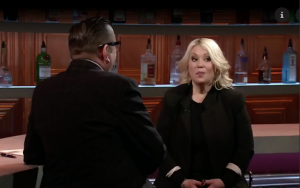
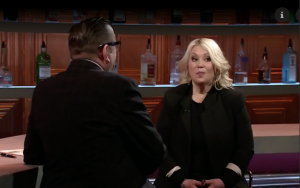
On this “Pop Life” encore the panel, singer-songwriter Jann Arden, R&B, singer-songwriter and actress Jully Black and former CFL player and philanthropistOrlando Bowen, open up about how they found their voice and the importance of sharing it with the world.
Film critic and pop culture historian Richard Crouse shares a toast with celebrity guests and entertainment pundits every week on CTV News Channel’s all-new talk show POP LIFE.
Film critic and pop culture historian Richard Crouse shares a toast with celebrity guests and entertainment pundits every week on CTV News Channel’s talk show POP LIFE.
Featuring in-depth discussion and debate on pop culture and modern life, POP LIFE features sit-down interviews with celebrities from across the entertainment world, including rock legends Sting and Meat Loaf, musicians Josh Groban and Sarah Brightman, comedian Ken Jeong, writer Fran Lebowitz, superstar jazz musician Diana Krall, stand-up comedian and CNN host W. Kamau Bell, actors Danny DeVito and Jay Baruchel, celebrity chefs Bobby Flay and Nigella Lawson, and many more.
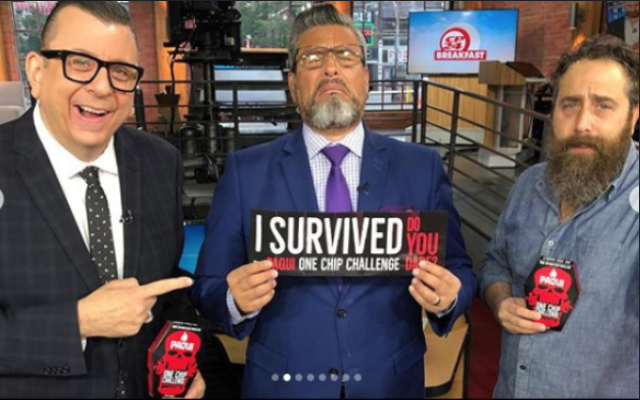
Richard joined the “CP24 Breakfast” team to try the Paqui Chips #OneChipChallenge. Wearing protective gloves and with a glass of cool, soothing milk nearby, he tried the hottest chip on earth.
If they gave out Oscars for pole dancing the release of “Hustlers” would place Jennifer Lopez one step closer to completing her EGOT collection.
“Jenny from the Block” plays Ramona Vega, centerfold turned superstar stripper. It’s the 2000s and the dancers at New York’s Sin City Café are lap-dancing all the way to the bank. “2007 was the best,” says Destiny (Constance Wu). “I made more money than a brain surgeon.” Ramona has taught Destiny the craft of separating the Wall Street bros who frequent their club from their money. She teaches the neophyte fancy pole moves like the “fairy sit” and “fireman spin,” and the nuances of customer service. “Get them a single, a double, then a triple and then a single,” she says. “You want them drunk enough to get their credit card but sober enough to sign the check.”
They follow the “green brick road” until September 29, 2008. Wall Street is gutted by a stock market crash, putting a stop to open-ended expense accounts and the dolla bills that showered the women as they danced. “It’s the end of an era in American business,” says Brian Williams on the news, and the end of way of life for Destiny, Ramona and friends.
Overnight everything changes. The business turns from glamourous to grimy. “The guys don’t want to spend the dollars,” says the dancer’s den mother (Mercedes Ruehl), “the girls don’t want to share tips in management took the cameras out of the champagne rooms.” With lap dances no longer enough to make money Ramona comes up with a new way of separating the Wall Street guys from their cash. “We can’t dance forever. We have to think like them. Nobody gets hurt.” A mix of sex appeal, flattery and knock-out drugs, it’s not exactly legal but they have no sympathy for the businessmen who they say robbed the country but didn’t get any jail time. “I know it sounds bad that we were drugging people,” Destiny says, “but in our world it was normal.” New recruits to their booming business bring trouble and soon it’s not the stock market crashing but police, crashing through their apartment doors.
Based on a true story and inspired by the New York Magazine article “The Hustlers at Scores” by Jessica Pressler, the movie’s narrative spine is an interview between a journalist (played by Julia Stiles subbing in for Pressler) and Destiny, giving the movie an as-told-told vibe.
The result is a fleet-footed dramedy that captures the heady, high-heeled days at the club when the money flowed like water and it was all giddy good times for the dancers. An early scene puts you in the mind of an R-rated snowglobe as J-Lo swings around a pole, dollar bills filling the air around her. Like the time it evokes, it’s over-the-top but easily upped by the next sequence which finds Ramona finding a quiet moment on a New York City rooftop. As the lights of the city twinkle behind her she is in repose, smoking a cigarette, a fluffy fur coat barely concealing her stage costume. Like some kind of Venus on the Half-Shell by way of 42nd Street she embodies the decadence of the time.
In the first part of the film the camp is amped. By the time Usher shows up, strutting into the club with the cool factor of Sinatra in his prime, a fistful of Benjamins in hand, the picture of the wild ‘n woolly era is complete. Director Lorene Scafaria then gear shifts, adding in the sense of desperation that comes when the money dries up. The movie shifts gears, becoming more of a caper flick as Ramona and pals go fishing for Wall Street sharks.
At the core of the story is the sisterhood between Ramona and Destiny. It’s a mother, mentor pairing that sees the two women bond on a level that transcends simply being business partners. “We are the untouchables,” says Ramona, “like Kobe and Shaq.” They become intricately involved in one another’s lives, which makes the sting of the coming events even more complicated. Lopez and Wu have spark together onscreen, bringing some heart to a story of people who trolled the dark side for a living.
“Hustlers” is a glitzy caper about money, friendship, and revenge against the bankers who went unpunished after a financial crisis brought the country and the dancers at the Sin City Café to their knees. “Everybody is hustling,” says Ramona. “This city, this whole country is a strip club. You’ve got people tossing the money and people dancing.”
“The Goldfinch” is a sprawling movie based on a Pulitzer Prize for Fiction winning novel by Donna Tartt. Like the book, the film, starring Ansel Elgort, spans years and is stuffed with colourful characters. Also, like the book, it could be described as Dickensian, given its study of social status, unrequited love and the topper, abused orphans. But the film, despite the ample plotting, is really about something simple, how the beauty of great art can give life meaning.
The action begins when Theo Decker (Oakes Fegley) is 13 years old. He and his mother are spending an afternoon at the Metropolitan Museum of Art in New York before an appointment with his school principal. They look at some of mom’s favorite paintings, Rembrandt’s “The Anatomy Lesson of Dr. Nicolaes Tulp” before becoming separated. From the next room Theo hears a panic, then an explosion. He survived the blast but his mother was killed and he has always felt responsible for her death.
Throughout his eventful life, from being almost-adopted by a wealthy Upper West Side family, and re-connecting with his errant father (Luke Wilson) to becoming fast friends with a sketchy neighbour (Finn Wolfhard as a teen, Aneurin Barnard as an adult) and carrying a torch for Pippa (Ashleigh Cummings) another explosion survivor, his constant companion is a “The Goldfinch,” a valuable painting by Dutch painter Carel Fabritius he took from the blast site. Moving from place to place, state to state, it was a carefully wrapped reminder of the worst day of his life.
“The Goldfinch” is respectful of its source material. The book is an epic exercise in storytelling, twisting and turning its way through Theo’s life, exploring all the dark nooks and crannies. Flashing forward and back the film also takes time in allowing us to form a connection with Theo and the guilt he wears like a badge. As an adult, played by Elgort, a veneer of charm hides his inner turmoil and heavy drug use. While it is interesting to see Theo navigate these choppy waters the heart of the film lies in young Theo.
Fegley, best known for his touching work in “Pete’s Dragon,” inspires pure empathy, playing the youngster as someone trying to take control of a life he has no control over. He’s a victim of circumstance as much as his mother is, but his curse is that he must go on, burdened by the past. Fegley reveals layers. In a standout performance, he’s simultaneously a kid and an old soul.
“The Goldfinch” swings for the fences but doesn’t quite hit a home run. The expansive story takes one or two strange turns too many and feels stretched in its final half-hour but is bolstered by tremendous performances courtesy of the ensemble, with Fegley, Kidman, Jeffrey Wright and Luke Wilson leading the pack.
“Freaks,” a new sci-fi horror film starring seven-year-old Lexy Kolker and eighty-three-year-old Bruce Dern, is a multi-layered head-scratcher that wonders what it might be like to be a helicopter parent to one of the X-Men.
Seven-year-old Chloe (Kolker) is kept a prisoner in the rundown suburban home she shares with her father Henry Lewis (Emile Hirsch). But this is not “Room” or any other confinement drama. This is the story of a father whose daughter is gifted in a way that will make her a target if she is discovered. Henry has tried to shield her from all this. “I never wanted the world to turn her into a freak,” he says. “She’s just a girl.” Father and daughter are blessed (or cursed depending on your point of view) with the ability to read minds, make themselves invisible and generate protective, clear bubbles.
Chloe doesn’t know or understand the extent of her powers and as long as she is kept separate from the world, may never know. Her only connections to outside world are ghostly visions (or are they real?) of her late mother Mary (Amanda Crew) and the ice cream man, Mr. Snowcone (Bruce Dern) who seems to know a lot about her.
She has been trained to lie about her identity but soon she begins to wonder what lies beyond the walls of their home. What follows is an extreme case of stranger danger.
“Freaks” takes its time. It allows the viewer to reach their own conclusions, and then, more often than not, shatters them. The only thing that is for sure is that Chloe longs for her mother, a feeling expertly demonstrated by Kolker in a performance that gives the movie the heart it needs to make us care for the characters and the situations. The low fi effects don’t distract in the way a larger budget might have afforded but the humanity on display makes up for the lack of eye candy.
Good sci fiction is rarely exactly about what we see on screen. In that sense “Freaks” isn’t about Chloe’s powers, it’s about being different from those around you, about persecution, about feeling unwanted. There are feelings that many can relate to and making them universal, accessible and by times even exciting, is the film’s greatest strength.
Richard hosted the TIFF press conference for the Susan Sarandon drama “Blackbird.” The story of a dying mother assembles her family to spend a final weekend together before she ends her life was directed by Roger Michell and co-stars Sam Neill, Rainn Wilson and was produced by Sherryl Clark.
“It’s an individual choice and it should be legal and controlled, and there are very, very strict perimeters around… talking to doctors,” Sarandon said at the press conference. “It’s not just ending your life but being able to end your life with dignity and without pain, and I think anybody that has had a family member that has really suffered is very, very much interested and pro having that choice.”
From left to right: Producer Sherryl Clark, Rainn Wilson, Susan Sarandon, Sam Neill and director Roger Michell.
The first instalment of “It,” Stephen King’s scary clown epic, was about overcoming fears. Specifically, the shape-shifting Pennywise the Dancing Clown a.k.a. It (Bill Skarsgård), the manifestation of all the character’s fears. The new film, inventively titled “It: Chapter Two,” is about resilience, about sticking your neck out for your friends.
The new one is set in 2016, twenty-seven years after the preteen Loser’s Club battled Pennywise in his sewers lair and kept the town of Derry, Maine safe from the child gobbling monster. Now, the childhood friends have gone their separate ways. Loser’s leader Bill (James McAvoy) is now a successful mystery novelist. Sexual abuse survivor Beverly (Jessica Chastain) went on to become a fashion designer, while Ben (Jay Ryan), the overweight, bullied kid is now an architect living in Nebraska and loud-mouth Richie (Bill Hader) is a DJ in Los Angeles. Other members fled town as well. Hypochondriac Eddie (James Ransone) runs a NYC limousine company and Stanley (Andy Bean) is now an Atlanta-based accountant.
Only Mike (Isaiah Mustafa) stayed in Derry. Traumatized by the events of his youth he battles a substance abuse problem but stays on top of Pennyworth’s existence by sleeping next to a police scanner. “Something happens when you leave this town,” says Mike. “The farther away, the hazier it all gets. But me, I never left. I remember all of it.” When trouble in the form of a clown comes back to town Mike summons the others Losers to come back home to conquer their fears, bond together and do battle with their old foe. “Did you miss me?” taunts Pennywise. “No one wants to play with me anymore.”
At almost three hours “It: Chapter Two” is an overindulgent mish mash, part horror, a splash of comedy and heaping helping of pop psychology. Oh, and a clown. To say the movie takes it’s time is an understatement along the lines of suggesting Pennnywise floss more often. It almost feels like you’re binging several episodes of a serialized version of the story without the benefit of being able to switch channels when the going gets repetitive.
And it gets repetitive. We are endlessly reminded of the character’s childhood traumas, told of Pennywise’s evil and if someone said to me, “We’ve got to stick together,” as many times Bill says it here, I would make a run for it and never look back. The movie says it best when Ritchie exasperatedly says, “We’re caught up, OK!” over an hour in, and yet the exposition and repetition continues.
There are several striking nightmarish images and Hader provides some much-needed comic relief but it feels as though director Andy Muschietti and screenwriter Gary Dauberman regarded King’s novel as some sort of sacred text and where unable to stray from the written word. One of the enjoyable things about King’s novels are there world building, his attention to detail and skill for weaving mythology into real(ish) world situations. The best adaptations of his work carefully parse these elements to boil down the essence of the story. “It: Chapter Two” does not make the effort. Instead it laboriously recreates the novel, frills and all. It may have worked in print but here it feels the running gag about Bill’s inability to properly end his stories has come to life, manifesting itself in the CGI heavy climax and the extended coda.
In this sequel Pennywise’s red balloon has finally popped.
 Making Bruce Springsteen laugh: I made Bruce Springsteen laugh on Thursday. We talked at a lunch for his movie “Western Stars” and I told him about my first time using a Sony Walkman. I borrowed a Walkman, used the last of my cash to buy a “Born In The USA” cassette and walked through the Eaton Centre with the thing turned up to 11. As let the music reverberated around my head I remember thinking, “This is so much easier than lugging the stereo around.” He liked the story and said, laughing, “Thanks for telling me that.” #Boss