The phrase “Fun for the whole family” takes on a new meaning around Christmas time. The kids are on winter break, grandma and grandpa have come to visit and Cousin Ethyl still has last year’s gravy stains on her Christmas sweater. How do you keep everyone entertained once the gifts are opened, the eggnog is all gone and everyone is sick of turkey leftovers?
You go to the movies. Grandma might not enjoy the drug-fuelled excesses of Joaquin Phoenix’s latest, Inherent Vice and at 142 minutes Exodus: Gods and Kings is probably too long for young attention spans, but there are a couple of films opening in theatres the whole clan can enjoy.
Produced by Jay-Z and Will Smith the new version of Annie is “a modern re-imagining of a beloved musical…” Read the whole thing in the December issue of Movie Entertainment magazine on stands now!
Science fiction author Isaac Asimov’s Three Laws of Robotics are a trimmed down version of The Ten Commandments for androids. Simple, direct and to the point, Asimov declared, “A robot may not injure a human being or, through inaction, allow a human being to come to harm. A robot must obey the orders given to it by human beings, except where such orders would conflict with the First Law. A robot must protect its own existence as long as such protection does not conflict with the First or Second Law.”
Asimov’s rules have inspired short stories, video games, music and cartoons. Roland Charles Wagner’s short story gave them an erotic spin in Three Laws of Robotic Sexuality, while the game Portal 2 sees all military androids sharing one copy of the laws of robotics.
And in the Mega Man series by Archie Comics, automatons are almost defeated by an anti-robotic terrorist group because they must abide by the three laws.
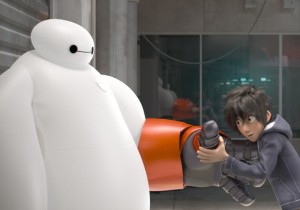
This weekend, Baymax, the lovable inflatable robot at the heart of Big Hero Six, abides by the laws. “Hello,” he says. “I am Baymax, your personal health-care companion.”
The roly-poly inflatable bot can almost instantly diagnose and treat a variety of diseases but even when he is transformed into a crime-fighting warrior, he still plays by the rules.
Asimov’s stories have been turned into films like I, Robot and Bicentennial Man, where the robots follow the dictums. But not all movies stay true to the rules.
In Alien, the Hyperdyne Systems 120-A/2 cyborg character Bishop (Ian Holm) says, “It is impossible for me to harm, or, by omission of action, allow to be harmed, a human being,” but later tries to kill Ripley (Sigourney Weaver) by choking her with a rolled up porno magazine.
The 1951 classic The Day the Earth Stood Still has both good and evil robots. When alien android Klaatu’s message of friendship to earthlings is met with a bullet from a sniper, his eight-foot metal robotic assistant Gort lets loose with a disintegration death ray.
Finally, worse than Blade Runner’s killer android Roy (Rutger Hauer) or the robot gunslinger from Westworld, is Maximilian, the silent-but-deadly android from The Black Hole.
Not only does he wordlessly do the bidding of the evil Dr. Hans Reinhardt (Maximilian Schell), the blood-red bot later merges with his human creator to lord over the fire and brimstone of hell. Lawgiver Asimov surely would not approve.
What’s a wormhole anyway? According to Wikipedia it’s a “postulated method, within the general theory of relativity, of moving from one point in space to another without crossing the space between.” Huh? Maybe it’s easier to think of them as a cosmic shortcut to the past or future. If Bill and Ted could figure these things out—their first “excellent adventure” saw them sucked into a wormhole to assemble historical figures for a high school project—then so should we.
Christopher Nolan uses these theoretical bridges through time as the bridge through his new space opera “Interstellar.”
In the earthbound portion of the story crop blight has led to a food shortage and a worldwide ecological disaster. Cooper (Matthew McConaughey), is a pilot-turned-farmer trying to find a way for his family to survive the impending apocalypse. An answer to his problems arrives in the form of Professor Brand and his daughter Amelia (Michael Caine and Anne Hathaway) who believe a new planet with the possibility of supporting life exists on the other side of a wormhole near the planet Saturn. “We’re not meant to save the world,” Brand says. “We’re meant to leave it.”. Cooper, Amelia and a team of astronauts embark on a year-year quest to find the planet and find humanity’s salvation.
“Interstellar” is twice as long as the similarly themed “Gravity,” but only half as enjoyable. It’s larger in scope—this is Christopher “Billion Dollar Baby” Nolan after all—than the Sandra Bullock movie, and more ambitious too, but it’s a strange mix of sci fi and sentimentality that plays up the idea of the power of love. The only thing missing is a Celine Dion over the final credits.
Nolan reaches for the stars with beautifully composed shots and some mind-bending special effects, but the dime store philosophy of the story never achieves lift off.
McConaughey’s been down this road before in “Contact,” and acquits himself well enough, but the interesting actor who anchored “True Detective” gets lost in space for much of the 169-minute-running time.
On the upside “Interstellar” earns points for not being based on a novel or video game. On the downside, it’s not based on good sci fi either.
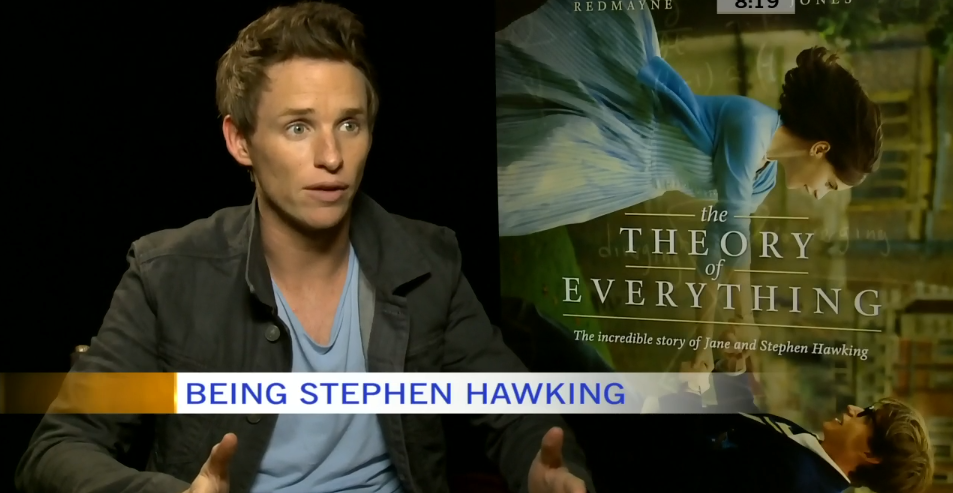
For a man who believed that time had a beginning and an end, I guess it makes sense that his biography should be told in a linear fashion. Playing like Stephen Hawking’s Greatest Hits, “The Theory of Everything” is a blow-by-blow account of his remarkable life, from socially awkward scientist-in-training to husband, father and finally, the wheelchair bound physics superstar.
The story begins in 1963. Hawking (Eddie Redmayne) is a student at Cambridge working toward deciding what his life’s study will be. Already an acknowledged genius he takes on time as a subject for his doctorate. As he sets out to prove, with a single equation, that time had a beginning two things happen that change his life forever. He meets Jane (Felicity Jones), a pretty PhD student who would become his wife, mother of his three children and life support system after he is diagnosed with a motor neuron disease related to ALS. “I love you,” she blurts out when she learns he has only been given two years to live. “That’s a false conclusion,” he replies, scientifically.
Doctors dramatically underestimated his life expectancy, but were correct in their diagnosis. His body deteriorates until he is confined to a wheelchair and cannot speak, but his thoughts remain as vital as ever. As he developed theories like cosmological inflation Jane was his lifeline, and would remain so until just before the release of his besting book “A Brief History of Time.”
“The Theory of Everything” is not just the story of a great man but also the story of the great woman behind the man. As Jane, Jones portrays the strength, wisdom and occasional frustration it took to be Hawking’s partner. It’s a nicely rendered performance but, in art as in life, it’s Hawking who gets all the notice. Or should I say Redmayne as Hawking who steals the movie.
The actor bears an uncanny resemblance to the physicist but doesn’t just hand in an impersonation. It’s a fully rounded performance that captures the indomitable spirit that has allowed Hawking to survive and thrive, showcasing the man’s intelligence and humor—while courting Jane he tries to work out mathematical probability of happiness. Redmayne, whose charming work in “My Week with Marilyn” was over shone by a show stopping performance by Michelle Williams, takes control of the movie from the first frames and doesn’t let go, even in the latter half when he has no voice and speaks through a computer.
In many ways “The Theory of Everything” is a standard biopic—there’s loads of shots of Hawking furiously scribbling mathematical symbols on a chalkboard for instance—but Jones and Redmayne give this study of a scientific mind something special—heart.
For all intents and purposes “Big Hero 6” is an animated superhero movie aimed at kids too young to sit through the violent theatrics the Marvel universe offers up. The main difference, and the thing that makes the movie special, comes in the form of an empathetic blowup doll who could give the Stay Puft Marshmallow Man a run (or maybe just a waddle) for the title of Cuddliest Causer of Mass Destruction.
Set in San Fransokyo, the story focuses on fourteen-year-old robotics genius Hiro Hamada (voice of Ryan Potter). His brother Tadashi (Daniel Henney) is also a whiz kid but has taken a different route. Hiro spends his time making robots to fight in illegal bot wars while Tadashi studies at the “nerd school” and has built the inflatable health care companion Baymax (Scott Adsit). Realizing his potential is being wasted Hiro puts his big brain to work to create microbots with a Borg-like collective consciousness that impresses the university’s Professor Callaghan (James Cromwell) so much he offers Hiro a scholarship. Before he can enroll, however, a tragedy claims the life of his brother. Compounding his heartbreak, Hiro discovers his technology has fallen into the wrong hands. Finding out who took the tech leads Hiro down a dark path of revenge, but with the help of Baymax and Tadashi’s friends Gogo (Jamie Chung), Wasabi (Damon Wayans Jr), Honey Lemon (Genesis Rodriguez) and Fred (TJ Miller) the young genius can get some closure and discover his inner super powers.
There are set pieces in “Big Hero 6” that rival anything from the Marvel imaginations. Characters fly, breath fire and do battle with lasers. Buildings are leveled and there a giant time travel hovers in the air, threatening to transport everything in sight to another dimension. It’s big, impressive stuff, but the thing people will remember when they leave the theatre is Baymax, a rudimentary inflatable robot who walks like a baby penguin. His “nonthreatening huggable design” makes him look like a roly poly vinyl snowman with ovals for eyes. He’s nondescript, like a bloated crash test dummy, but he is the heart and soul of the movie.
Without him “Big Hero 6” would mostly be a series of slickly rendered—the animation is really lovely—action sequences, catchphrases and plot threads about revenge and life lessons. With him, however, the movie has real heart. The balloony Baymax doesn’t just rescue Hiro’s humanity; he gives the movie a large dose of it as well.
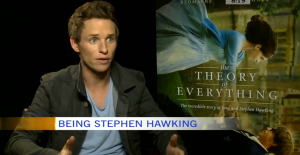
Richard’s “Canada AM” interview with “The Theory of Everything” star Eddie Redmayne. They talk about shooting the film and Stephen Hawking’s reaction to seeing his life portrayed on screen. Watch the whole thing HERE!
From IMDB: The story of the physicist Stephen Hawking and Jane Wilde, the literature student he fell in love with whilst studying at Cambridge in the 1960s.
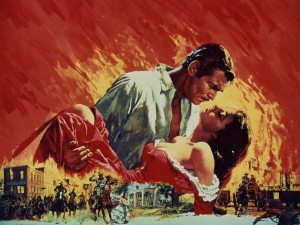
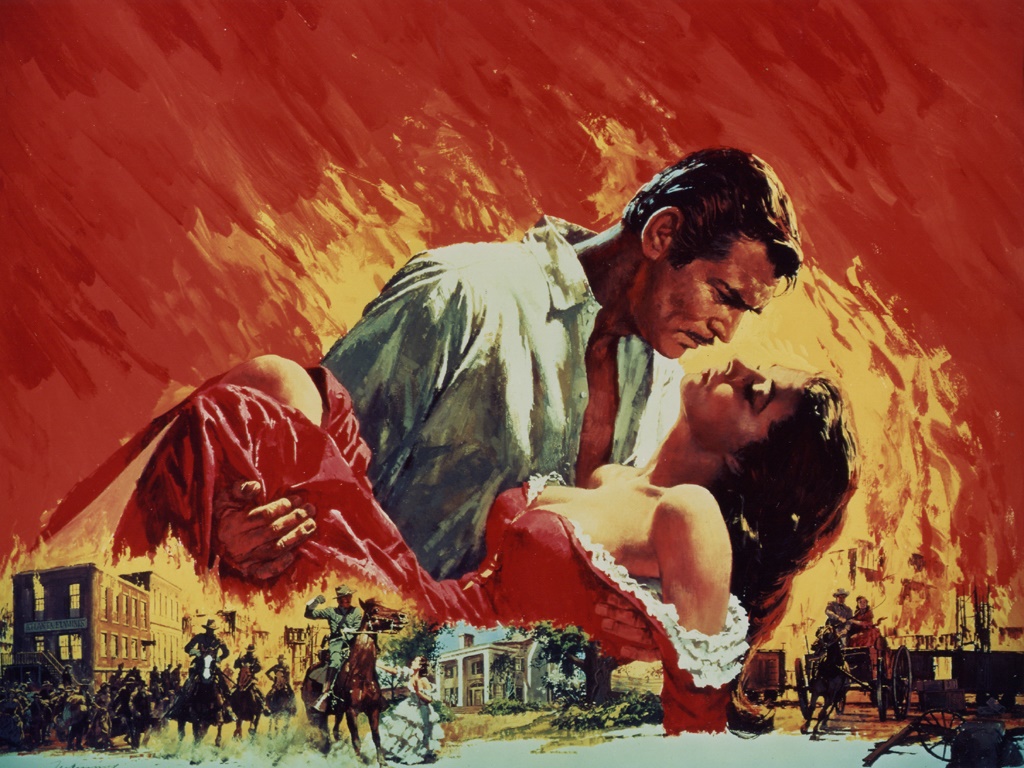
From Cineplex.com: It was the first color film to win the Best Picture Oscar and is ranked as one of the greatest movie of all time by the American Film Institute. In its first four years of release the film sold 59.5 million tickets, a number equal to half the population of the United States in 1939 and according to Box Office Mojo it’s the highest grossing film of all time when adjusted for ticket price inflation.
This year Gone with the Wind celebrates its seventy-fifth anniversary as “the most iconic film of all time.”
Set against the backdrop of the American Civil War, the story of Southern Belle Scarlett O’Hara and her torrid affair with blockade runner Rhett Butler remains so popular it has motivated legions of fans, called Windies, to gather in period costume in author Margaret Mitchell’s hometown of Atlanta, Georgia… Read the whole thing HERE!
The Hogtown Rake’s Pedro Mendes interviews Richard on his style, where he shops and what he likes.
Why do you like to dress well? I think I inherited my style sense from my father. He’s 86 years old and I’ve never seen him without, at minimum, a shirt and tie. He’s not a flashy man. I gave him some colourful socks at Christmas a few years ago and he still doesn’t feel comfortable enough to wear red striped footwear. Nonetheless he’s always well turned out and some of that must have rubbed off on me… Read the whole thing HERE!
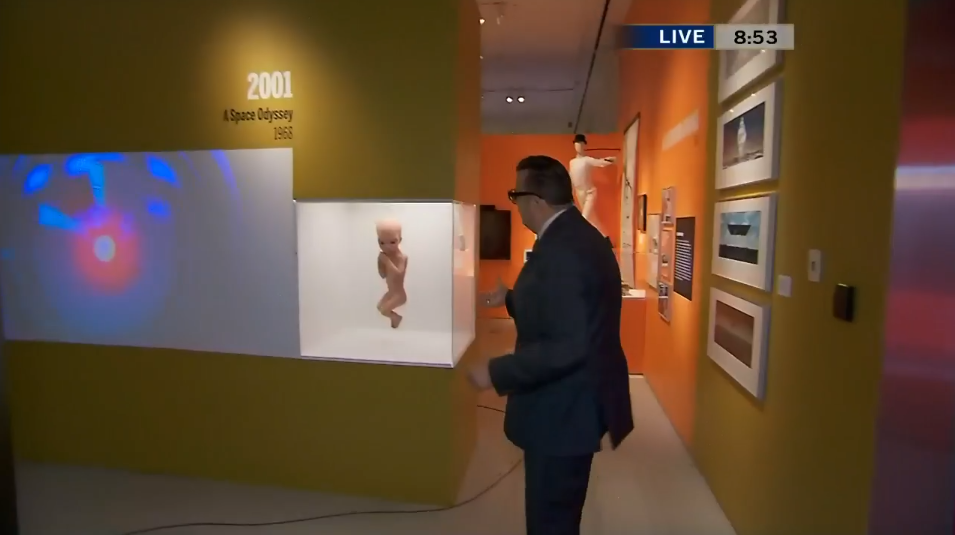
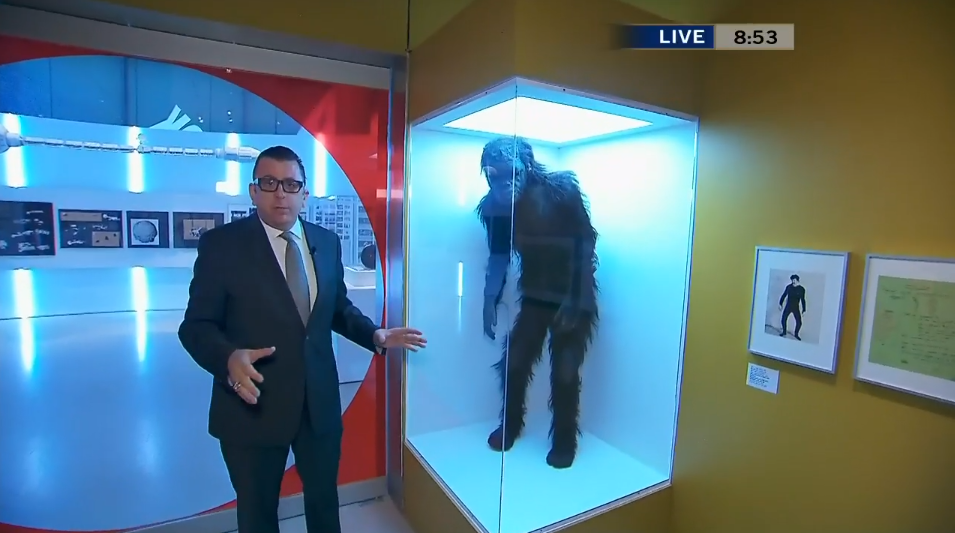
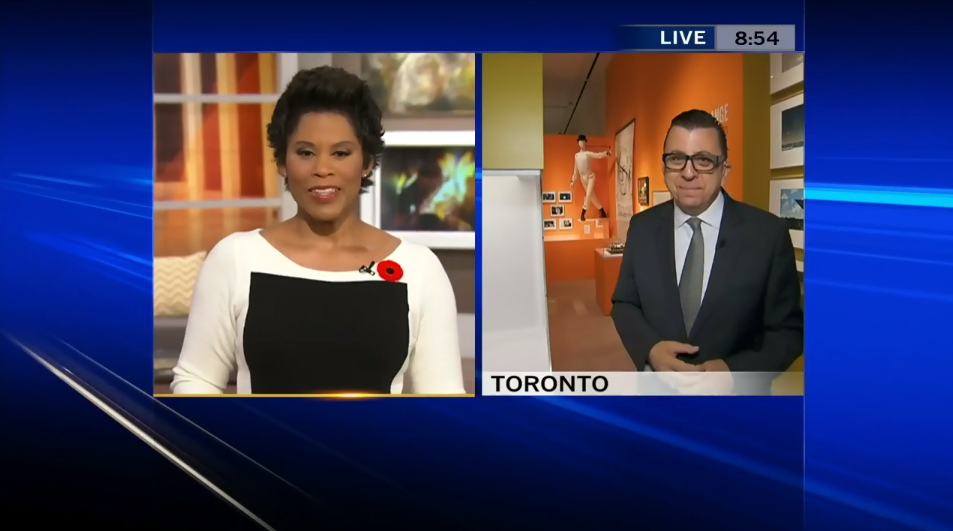
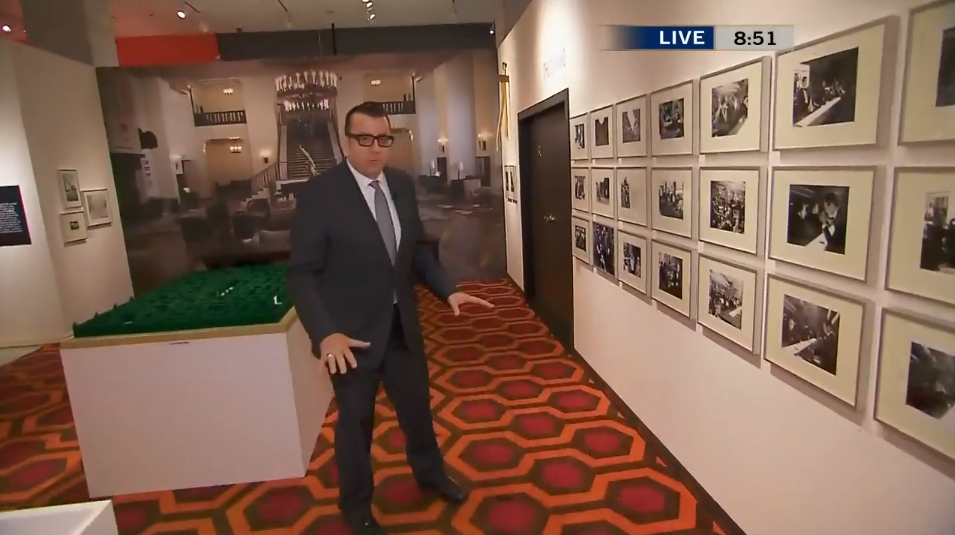
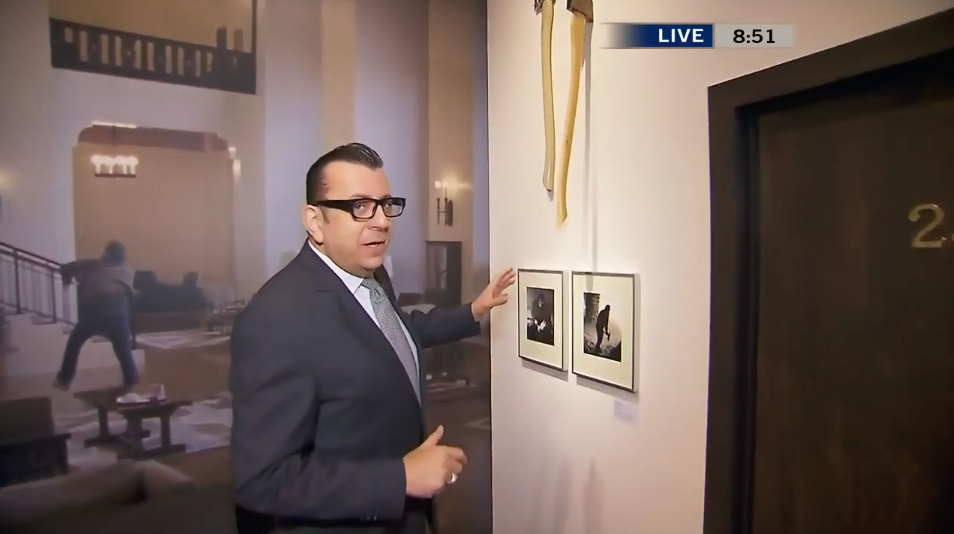
Richard takes a walk through the TIFF Bell Lightbox exhibit of the work of Stanley Kubrick. He highlights props from “Full Metal Jacket,” “The Shining,” “2001: A Space Odyssey,” “A Clockwork Orange” and “Barry Lyndon.” Click HERE to see “The Shining’s” axe and typewriter, Alex’s cane from “A Clockwork Orange” and much more!
 The phrase “Fun for the whole family” takes on a new meaning around Christmas time. The kids are on winter break, grandma and grandpa have come to visit and Cousin Ethyl still has last year’s gravy stains on her Christmas sweater. How do you keep everyone entertained once the gifts are opened, the eggnog is all gone and everyone is sick of turkey leftovers?