Your enjoyment of “Arthur,” the remake of the 30 year old Dudley Moore comedy, is in direct ratio to your enjoyment of Russell Brand. His brand of Brit-speak verbal diarrhea works in small doses, the trick here is to see whether audiences will sit through two hours of word-play rivaled only by Charlie Sheen on a crack fuelled internet rant. Brand is Arthur Bach the ne’re-do-well heir to an enormous fortune. He’s a womanizing playboy, a drunk man-child whose nanny (Helen Mirren) describes as “merely shaped like an adult.” When his “savant-ish gift for defying death with fun” embarrasses his mother she brings down the hammer. Either he straightens up and marries the beautiful but all-business Susan or be disinherited. Trouble is, he`s in love with Naomi (Greta Gerwig) a charismatic Grand Central Station tour guide.
“Arthur Redux” isn’t an improvement on the original, but it isn’t a waste of time either. Brand is front and center here, chewing the scenery as though he hasn’t eaten in years. For the first hour he delivers every line as if it was a punch line, which would be OK if they were all actually punch lines, but they’re not. Brand, like the character he’s playing here, isn’t nearly as charming as he thinks he is and even though he hits the mark 40% of the time, the delivery gets tired. Luckily the movie improves when it takes a turn for the touching. The Naomi love story works because of Greta Gerwig’s natural charisma and once Mirren’s character actually becomes a character and less a sounding board for Brand’s antics, she adds some depth to the story.
“Arthur” isn’t going to erase the original from people’s minds—it’s a tad too long and a titch too predictable—but its mix of comedy and romance is almost as intoxicating as whatever Arthur swigs out of his ever-present flask. And it’s worth it to see Helen Mirren in a Darth Vader mask.
“African Cats,” the new slice-of-life-and-death documentary from Disney Nature, is a beautifully shot look at feline life on the African savannah in Kenya. Narrated by Samuel L. Jackson, it is one movie that most certainly cannot run the disclaimer, “No animals were hurt during the making of this film.”
In an effort to create a dramatic structure directors Alastair Fothergill and Keith Scholey divide a section of the Masai Mara nature reserve in Kenya into two halves separated by a river. On one side is Kali, a young powerful lion and his sons, the other territory is ruled by Fang and his lionesses. Also present is Seta, a mother cheetah who is raising five cubs. Narrator Jackson narrates the story of how their lives intertwine. It’s serious circle of life which lead to me wonder how there are any animals left in Africa—all they seem to do is eat one another.
Advances in camera technology allow Fothergill and Scholey to get intimate shots that likely weren’t possible years ago. The audience is treated to up-close-and-personal looks at the mother cheetah raising her newborns, a showdown between a fierce lion and a crocodile and incredible footage of life in the wild. The movie works best when it backs off and allows nature to take its course. Showing us how mama cheetah fends off a pride of lions who are looking at her cubs like they’re an amuse bouce is riveting stuff but occasionally the movie seems contrived. It’s a nature—but not completely natural—documentary.
Case in point. When an older lioness leaves her pride for the last time, meaningful looks are exchanged between the old lion and her former friends with the kind of dramatic editing that would make the producers of “The Hills” envious. On the African savannah life is interesting enough without having to cobble together shots for dramatic effect.
Most dramatic of all are the hunting scenes, although they are most definitely not for little Jimmy’s eyes. In one sequence Samuel L. Jackson purrs, “Success. Cheetah’s cubs will not go hungry tonight,” as the cat pulls apart a gazelle she has just hunted and killed. There are several circle of life scenes that will freak younger viewers out, so be warned.
“African Cats” has all the elements of a good story; there are heroes—like the mother cheetah—and villains—hyenas apparently, are no laughing matter; not even the animal huggers of PETA could love these nasty little buggers—and real life conflict. Too bad it occasionally feels manipulated.
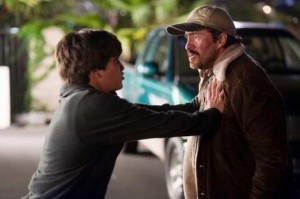
This character study from the director of About a Boy and featuring Weeds star Demián Bichir as an illegal immigrant gardener in Los Angeles, is a low key and timely drama about building a new life in a new country. Heavy on melodrama, story wise it doesn’t offer much we haven’t seen before in similarly themed stories, but acting wise it is a powerhouse. Bichir hits all the right notes in an award worthy performance that brings heart and soul to a story that unfortunately feels like a Hollywood-ized take on the plight of illegal immigrants in California.
In his new film Mike Clattenburg makes the trip from the trailer park to Afghanistan. The director, who made his name creating and directing “The Trailer Park Boys,” takes a gonzo look at the journalists who cover the war.
Nick Stahl is Luke, a hotheaded reporter crestfallen when his story about an out-of-control Canadian sniper is suppressed by his newspaper. Determined to bring the story to light, he and sidekick Tom (Nicolas Wright) return to Afghanistan to gather more information and report an unsanitized version of the war. In his absence the war torn country has changed, and he finds himself struggling to “make sense of a place that makes no sense.”
Shot in British Columbia and Nova Scotia “Afghan Luke” does an admirable job in recreating the unpredictable feel of life in a war zone, complete with dark humor and unexpected twists and turns.
In “Abduction,” “Twilight” werewolf Taylor Lautner is Nathan, a typical teen who discovers his life isn’t what he thought it was when he finds a photo of himself on a missing person’s website. His investigation into the origin of the picture makes him a pawn in an international game of intrigue involving the CIA, an encrypted text message and the pretty girl from next door.
There is a certain percentage of the population who would pay to Lautner stand shirtless in a field, abs rippling in the wind. That would be a better movie than “Abduction.” He’s got the teen angst eye roll down to a science but other than that hands in the most wooden performance since Geppetto carved Pinocchio out of a block of oak. Beware of woodpeckers.
He’s in every scene and despite a tense fight scene here or a loud gun battle there; “Abduction” is sunk by bad acting and even worse dialogue. Even old pros like Alfred Molina and Sigourney Weaver can’t get past lines like “there’s a bomb in the oven,” one of the most hilairously bad lines this year.
“Abduction” will leave you wondering how, exactly, that bomb got into the oven and how exactly, this bomb made it into theatres.
Coming from director Roland Emmerich, you might expect “Anonymous” to be a large scale action movie about the end of the world, a prehistoric beast or giant Japanese monster. Instead the German director has left the disaster motifs of his previous work behind and created a large scale period piece about the importance of literature set against a backdrop of intrigue and sexual peccadilloes in seventeenth century England.
With a plot that mixes and matches themes from history and Shakespeare’s plays, “Anonymous” uses the backdrop of the struggle for succession between the Tudors and the Cecils as the Essex rebellion moves against Queen Elizabeth I (Vanessa Redgrave) to set the scene for the debut of Shakespeare’s plays. But were they actually written by Shakespeare? The movie supposes it was Edward De Vere, Earl of Oxford (Rhys Ifans)—the Anonymous of the title—who penned plays attributed to William Shakespeare. He kept to the shadows to save his family the embarassment of havimg a common writer in their midst and because thee plays were openly critical of the Queen’s advisors Cecil and Raleigh.
In a story ripe with mystery the only real question is how this got made at all. Big budget Shakespearean movies don’t get made much anymore, so I guess the next best thing is to make a big budget movie about Shakespeare, and Emmerich, despite his tendency to try and juggle too many story threads at one time does a good job at bringing the elegantly filthy world of Elizabethan Britain. Powdered faces, filthy fingernails and velvet jackets abound and the atmosphere adds much to the story.
This is a sprawling story with many twists and turns. The downside is the film’s sketchy casting. In flashbacks the queen and Edward appear to be the same age, but later after a major twist, are revealed to be sixteen years apart. This kind of lack of attention to detail muddies the waters in the flashbacks, making it difficult to follow the story in the first hour. Soon enough, however, all the players are straightened away and the pleasures of the story take hold.
A liberal mix of fact and fiction–there is no real life evidence that the Earl of Oxford penned the plays–“Anonymous” is a twisted tale about how politics and art intersect, and the written word’s ability to instigate change.
“The Artist,” a new film about old Hollywood, is a silent movie about talking pictures. When we first see star George Valentin (Jean Dujardin) in the movie’s film-within-a-film, a title card reads, “I won’t talk! I won’t say a word!” and so it is for the next ninety minutes.
Beginning in Hollywood before the advent of sound, when we first meet Valentin he is a big star, a screen idol who headlines action-adventure movies with melodramatic titles like “The Thief of Her Heart.” A chance encounter with a pretty girl named Peppy Miller (Bérénice Bejo) sets her on the path of movie stardom in the talkies, just as Valentin’s star fades, ruined by his pride and inability to change with the times. Soon the story takes on “Hollywood Babylon” overtones as Valentin becomes a Hollywood castoff. Will the former superstar end up like Karl Dane and Marie Prevost, real life silent stars, now forgotten? Or will he find the humility to reenter the movies?
“The Artist” could have simply been a glossy tribute to the silent age. The details are all there, the luscious black and white photography, classic soundtrack and the old school 4:3 aspect ratio, but the film is much more than that. Director Michel Hazanavicius has made a joyous movie that shows the tricks of modern day cinema aren’t necessary when you have interesting performances, a good story and chemistry.
Shot on Hollywood sound stages and on locations like the Bradbury Building, “The Artist” has an authentic look and feel, but it is the actors that clench the deal. Dujardin shimmers with charisma as he brings echoes of John Gilbert to the screen and Bejo finds the kind of balance of innocence and vamp that elevated the likes of Clara Bow from starlet to It Girl. To paraphrase Norma Desmond, they don’t need dialogue; they have faces! Luckily Hazanavicius allows their faces to do the talking, figuratively, not literally.
Ditto the other members of the star studded cast—John Goodman, James Cromwell, Penelope Ann Miller and Uggy, who hands in the pluckiest on-screen dog performance since Rin Rin Tin was the canine king of Hollywood.
“The Artist” is a treat, a film that forces the viewer to reexamine how we watch movies. Unlike so many of today’s films that do all the work for you, it allows imagination to become part of the experience. Every time you expect dialogue the movie remains silent which prompts the viewer to connect with the characters and the story in a much different way than we are accustomed to. In doing so it becomes one of the most engaging movies of the year.
I could have been a lawyer. Or a doctor. Or a truck driver, aerobics instructor or even a pastry chef. But instead I ticked off the film critic box on career day and began a journey that brought me to a screening of “Alvin and the Chipmunks: Chip-Wrecked,” a movie that chipped away at my will to live.
Once again Jason Lee returns as Dave, the owner, manager and father figure to Alvin, Theodor and Simon, chipmunk singing superstars and their sister group, the Chipettes. On cruise before heading off to the International Music Awards the critters raise havoc before becoming castaways on a remote island inhabited by a stranded UPS worker who has been searching for the island’s hidden treasure for ten years. It plays like a rodent “Gilligan’s Island,” with bits of “Survivor” and “Treasure Island” thrown in for good measure.
“Alvin and the Chipmunks: Chip-Wrecked” isn’t a movie, it’s marketing, an excuse to sell plush toys and soundtracks filled with chirpy–chippy?–versions of pop hits like “Vacation” and “Bad Romance.” (Parents be warned! Buy the soundtrack and spend the holiday season listening to Lady Gaga songs cutified to the point where they make Miley Cyrus sound like Megadeth.)
For all the film’s family friendly messages about family and responsibly and the occasional adult joke–“I can see Russia from here!”–I can’t help but see these Chipmunk movies as more an excuse to sell products than entertain young minds. I know not all kid’s flicks have to have a redeeming social message or an educational angle, but I do think they should aspire to something more than consumer culture.
The film’s two main human stars–Lee and David Cross–both started their careers doing much more alternative kinds of work. Lee as a skateboarder and Kevin Smith protégé, Cross as the evil genius behind TV’s “Mr. Show with Bob,” so it must come as a surprise to them how much time they now spend acting opposite furry co-stars whose idea of a great joke is initiating a dance-off with a group of “Jersey Shore” castoffs.
Cross, at least, seems to be in on the joke. He’s taking the paycheck and every now and again gets a good line like, “Hate, anger and resentment aren’t just the names of a girl group I once signed,” but Jason Lee, what is he thinking?
He’s a usually charming, edgy and funny performer force fit into the role beloved family entertainer. He fits the part well enough, although, frankly it could be anyone playing the role, but every minute spent working opposite wisecracking chipmunks makes it harder to remember when he made cool movies like Chasing Amy.
As commercials for kids toys go “Alvin and the Chipmunks: Chip-Wrecked” is state-of-the-art. As a movie it’s ninety minutes of product placement.
With the release of “A Dangerous Mind,” the tautly told story of two psychoanalysts you’ve heard of, Dr. Carl Jung (Michael Fassbender) and Sigmund Freud (Viggo Mortensen), plus one you’ve probably never heard of, Sabina Spielrein (Keira Knightley), director David Cronenberg is still exploring uncharted territory in his films.
On the surface the story seems simple enough. Two pioneering figures of psychoanalysis have a falling out over an intelligent, beautiful but troubled patient. In the hands of Cronenberg and writer Christopher “Dangerous Liaisons” Hampton however, the movie becomes an enticing stew of psycho-sexuality and repression that challenges commonly held beliefs about what is normal and what is not.
Cronenberg, always known for his crisp filmmaking, has rarely ever been this simply elegant. Shot compositions and camerawork are kept simple so as not to distract from the star of the show—the dialogue. As you can imagine, in a drama about three therapists (Spielrein became a doctor after her treatment with Jung), there is a great deal of talk. Separately and together they talk about their dreams, their pasts and, in the case of Jung and Spielrein, their future. It may be the most inward looking movie of the year, but in its introspection—and buried in the film’s subtext—is a restrained but fascinating glimpse into the lives and minds of these characters.
Keira Knightley delivers a brave, strange and Oscar worthy performance as Spielrein, while Fassbender expertly plays the repression that plagued Jung. Cronenberg muse Viggo Mortensen may seem an odd choice to play Freud, but he leaves behind the physical performances that have marked his best work to create a convincing portrait of Freud.
“A Dangerous Method” won’t be for everyone. The combo of love story and birth of modern analysis is an odd mix. The almost total lack of physical action—Cronenberg’s fireworks here are in the small moments and the ideas expressed in the script—means the focus is on the words, but where some will see a film rich with dialogue, others will see it as verbose. But that’s just the kind of duality the movie explores.