Helmut Newton, the provocative photographer and subject of the documentary “Helmut Newton: The Bad and The Beautiful” now on virtual cinema, often said that there are “only two dirty words”: “art” and “good taste.” The sentiment rings true in context of his work and that his word count is off is also telling; he was a provocateur but a playful one.
Newton, whose nudes make up a vast portion of this doc, called himself a “professional voyeur,” someone interested in the surface, his model’s bodies. How can you photograph a soul, he asks? His subjects, the women who fell under his male gaze for decades, have answers. Bold faced names like Isabella Rossellini, Grace Jones, Claudia Schiffer and Marianne Faithfull among others, sing his praises, most describing the liberating effects of standing in front of his camera. His love—or is it obsession?—of the female form is roundly applauded in the film, as it was during his career, but in the #MeToo era photos of naked women with their faces obscured or reduced to an assortment of body parts, or wrapped in chains, don’t sit as well as they once did.
Of all the famous women in the film only Susan Sonntag, appearing on a French language panel show with Newton, addresses the negative undertones of his work.
Director Gero von Boehm assembles archival footage, new interviews and lots and lots of Newton’s nudes to illuminate the life and influences of the man who signed off letters with the inscription, Your Naughty Boy. It moves along quickly, painting a picture of a charming eccentric consumed by his work. There is nothing terribly revealing (other than the photos), just hagiographic stories about working with the man on set. Some are funny—“Helmut loved chickens. He loved to photograph chickens,” Is the lead in for a story about the famous photog snapping pictures of a chicken in high heels for Vogue.—but most settle for talking about what a pleasure it was to work with the man.
More interesting is a look back at his influences. As a German of Jewish descent, he and his family fled Berlin in 1938, but not before he had soaked up some very specific influences. German Expressionism gave him the idea of photography as an outlet for expressing his inner ideas while Nazi sympathizer Leni Riefenstahl’s films like “The Triumph of the Will” influenced his use of what he thought of as idealised human forms.
This is as close as the film gets to digging deep or placing Newton’s work in any sort of social context.
“Helmut Newton: The Bad and The Beautiful” is a snapshot in time at one of the people who helped define the high fashion look of an era. That it doesn’t dwell on the art or its ramifications is something Newton may have liked but the lack of social context leaves the documentary lacking.
“Helmut Newton: The Bad and The Beautiful” is streaming now via virtual cinemas at Hot Docs; the Vancity; Cinema Moderne (Mtl) and the Art Gallery of Hamilton.
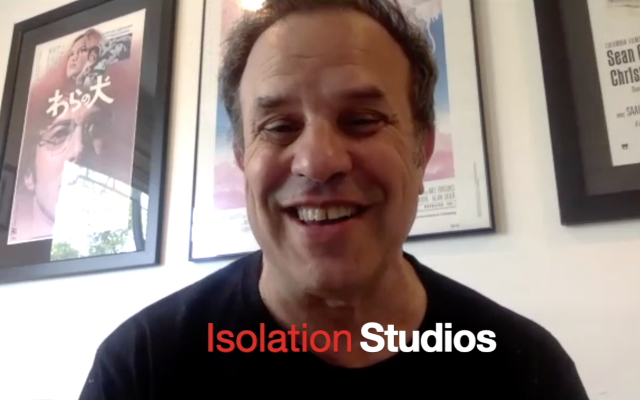
Check out episode twenty-four of Richard’s web series, “In Isolation With…” It’s the talk show where we make a connection without actually making contact! Today, broadcasting directly from Isolation Studios (a.k.a. my home office), we meet Rod Lurie, a West Point graduate who became a film critic and was once banned from screenings for referring to Danny DeVito as “a testicle with arms.” He is a journalist and author and, since 1999, a filmmaker. In this interview we talk about West Point, why he stood at attention at a screening of “Poltergeist” and, of course, his latest film, “The Outpost.” It’s an intense recreation of the Battle of Kamdesh, a bloody 2009 confrontation that saw 400 Taliban fighters attack Combat Outpost Keating in Afghanistan, a station manned by 53 American soldiers and just days before it was to be disbanded.
Critics are raving about the film. “IndieWire” said that Rod shot “much of the 45-minute long ambush in hectic, agile long-takes that allows him to capture the Battle of Kamdesh for all of its terror, and with a clarity that allows us to feel that terror in our bones.” The film is also being praised by veterans, including those who fought in the battle, for its realistic depiction of warfare and the life of a soldier.
“The Outpost” is available now on VOD, wherever you legally rent or buy movies.
“I think that my most memorable was in 1982,” he says in the interview. “I was a cadet at West Point. I had leave for the weekend. I went to New York City, and went to see two movies. One was The Road Warrior, George Miller’s film. Oh my god, I was so absolutely excited by that movie. I thought it was so thrilling and I left on such a high. I always knew I want to be a filmmaker and I said to myself, ‘That’s the kind of movie that I want to make. I want to have that sort of effect on an audience.’ I left that theatre, and I went to see another movie, and that movie was ET. And I remember at the end of that movie I was in tears like a baby. I’m this tough military guy and I’m crying because he went home and his heart is beating. ‘I’ll be right here.’ I leave that movie and I say, ‘Oh my god, this is the kind of movie I want to make.’”
Now let’s get to know Rod Lurie…
Watch the whole thing HERE on YouTube or HERE on ctvnews.ca!
Check out episode twenty-four of Richard’s web series, “In Isolation With…” It’s the talk show where we make a connection without actually making contact! Today, broadcasting directly from Isolation Studios (a.k.a. my home office), we meet Joe Pantoliano, a working actor for over forty years. From doing plays in empty basement theatres in New York City to Broadway to guest roles on the biggest television shows of several decades like “M*A*S*H” and “The Sopranos” and juicy supporting parts in films like “Risky Business,” “The Goonies,” “The Fugitive,” “Memento,” “Bad Boys” and “The Matrix” he says “There aren’t any small parts, only small paychecks.”
He jokes that he has a twenty-minute face, perfect for character work but his new film, “From the Vine” offers him the chance to show off his ninety-minute face. His first starring role in recent memory sees him playing a man who gives up a high-flying career as an executive to return to Italy, where he was born, to search for find his centre and regain his moral compass. In this interview we talk about the parallels between his life and that of his “From the Vine” character, Jimmy Stewart’s wig and how “On the Waterfront” made him want to be an actor… and here’s a surprise… it had nothing to do with Marlon Brando.
“They sent me to a place called Bob Roberts,” Joe says in the interview, “a guy who made wigs on Robertson Avenue. Robertson Boulevard in LA, and as I was walking up the courtyard out walks Jimmy Stewart. He’s got a fishing cap on, and he is carrying a box. It’s his hairpiece. I said, ‘Mr. Stewart. I’m a young actor and I just got a big job over at Warner Bros. I’m getting fitted for my first hair piece.’ He said, ‘Well good for you young man. I didn’t get fitted for mine until I was 38.’”
Let’s get to know Joe Pantoliano.
Watch the whole thing HERE on YouTube or HERE on ctvnews.ca!
Film critic and pop culture historian Richard Crouse shares a toast with celebrity guests and entertainment pundits every week on CTV News Channel’s exciting talk show POP LIFE.
Featuring in-depth discussion and debate on pop culture and modern life, POP LIFE features sit-down interviews with celebrities from across the entertainment world, including rock legends Sting and Meat Loaf, musicians Josh Groban and Sarah Brightman, comedian Ken Jeong, writer Fran Lebowitz, superstar jazz musician Diana Krall, stand-up comedian and CNN host W. Kamau Bell, actors Danny DeVito and Jay Baruchel, celebrity chefs Bobby Flay and Nigella Lawson, and many more.
“Target Number One” is a Canadian true crime story, but no, it’s not a retelling of Bill Miner’s railway robbery or the great Canadian Maple Syrup Heist of 2012. It’s a gritty look at investigative reporter Victor Malarek’s fight to uncover the truth behind a heroin bust orchestrated the Canadian Security Intelligence Service put an innocent man in jail.
A the-names-have-been-changed-to-protect-the-innocent retelling of the case of Alain Olivier, called Daniel Léger (Antoine Olivier Pilon) in the film, the movie stars Josh Hartnett as Malarek, a Globe and Mail reporter whose dogged determination reveals how the CSIS framed Léger, sending him to a Thai jail for eight years. “I’d be very careful before you print anything about this case,” a high-level cop tells Malarek.
Telling the tale on a broken timeline, director Daniel Roby skip through the details, building both sides of the story simultaneously until the two threads meld, but “Target Number One” isn’t an action movie. There is tension as Léger‘s situation worsens but the compelling part is Malarek’s search for the truth. It’s a procedural the takes its time putting the puzzle pieces in place.
Hartnett does a good impression of the driven reporter and Steven McHattie turns in another of his trademark edgy roles as Frank Cooper, a crooked RCMP officer, but it’s the work of Jim Gaffigan and Pilon that are memorable.
Gaffigan ditches his affable stand-up comic persona to create a medicine portrayal of Glen Picker, a drug dealer and police confidant.
As Léger, Pilon as an arc. From lowlife criminal, whose big score is ripping off a gas station for a full tank, to someone who can navigate survival in a squalid Thai prison, he’s simultaneously vulnerable and edgy and that makes him the film’s most memorable character.
“Target Number One” is a low-key thriller, short on action but long on intrigue.
In theatres now:
Now playing in Vancouver, Quebec, British Columbia, Alberta, Nova Scotia and New Brunswick
“From the Vine” breathes the same fragrant air as “Under the Tuscan Sun,” “A Good Year” and any number of other movies that offer up beautiful scenery and a stripped-down way of life as a tonic for the soul.
In a rare leading role Joe Pantoliano stars as Marco Gentile, an Italian born CEO of a Canadian automobile company. He’s at a crossroads in his life. Tired of the grind and troubled by an unkept promise he made years ago, he throws it all away. Without consulting his wife Marina (Wendy Crewson) he quits his high-paying job and makes a plan to hightail it to the tiny town of Acerenza, site of his grandfather’s old vineyard in Italy. There he hopes to reconnect to a way of life that will help him find his centre and regain his moral compass. But will his new beginning spell an end to old relationships?
There is a sense of déjà vu that comes along with watching “From the Vine.” Like the movies I mentioned above, it’s a beautifully shot travelogue with that follows a familiar path. Adding some spark are engaging performances from the cast.
Pantoliano plays Marco as a man having an extreme mid-life crisis, but it’s not about buying a Maserati or trading in his starter wife for someone younger. He’s having an actual existential crisis brought on by the realization that the life he leads isn’t the life he wants. To illustrate his dilemma director Sean Cisterna adds in a few surreal Felliniesque flourishes, but the heart of the character comes from Pantoliano’s rough-hewn charm.
As Marco’s long-suffering wife, Crewson brings warmth and a considerable amount of heart.
“From the Vine” doesn’t add anything new to the soul-searching travelogue genre but the point of these movies is not to reinvent the wheel. Like rom coms, the most formulaic variety of mass entertainment there is, it’s about the journey not the individual stops along the way. Sure, the story is predictable but it exudes good vibes and tries to appeal to our better natures and these days maybe that’s enough.
It may be possible to gauge your interest in “Dirt Music,” a new film on VOD starring Garrett Hedlund and Kelly Macdonald, by its advertising tagline. “Lose Yourself… Find Yourself… In Love.” That inspirational, Nicholas Sparks-style slogan tells you all you need to know about this movie. Much like the story itself, it’s vague, involves love but what does it really mean?
Stretched over two hours the film sees Macdonald play Georgie Jutland, a former nurse now playing step mother to the two sons of her new boyfriend, crayfish magnate, Jim Buckridge (David Wenham). Life in the tiny Australian fishing port of White Point is uneventful and unhappy until Georgie slips out for a midnight swim. While splashing around in the cleansing waters she meets Luther Fox (Garret Hedlund), a fish poacher plying his illegal trade. It is love at first sight and soon the two begin a passionate affair.
Luther is an enigma, a man with a tragic past. His family gone, he drifts though the world, mourning their loss. He’s a damaged guy who abruptly leaves White Point when it appears Buckridge has discovered the affair with Georgie. He heads north to the remote Coronation Island, looking for solitude and safety. Unable and unwilling to let him go, Georgie, with Buckridge‘s unlikely assistance, embarks on an epic search to find her love.
“Dirt Music” is a story of longing that turns out to be over-long. At a hair over two hours it is a feast for the eyes—the Australian landscape is breathtaking—but the story is as under developed as the film’s terse tagline. Considering the epic nature of Georgie’s search for Luther, these star-crossed lovers spend very little on-screen time together. Certainly not enough for the depth of the connection to be made clear. The result is a bit of a head-scratching exercise in lust and longing. Despite the soaring Australian temperature the pair barely have time to generate the heat needed to make us care when they are torn apart.
The story telling in “Dirt Music” trades in melodrama while Macdonald and Hedlund are playing it straight. She’s an open book, he’s broody whose hobby seems to be staring blankly into the ether. Both are bound by grief but the very thing that connects them feels at odds with the film’s over dramatic edge.
A truly great bar doesn’t just dispense drinks. Forget about bottle service and VIP booths, a great bar specializes in good will, community and acceptance for all who enter their doors. That’s the case with the Roaring ’20s, the dive bar that serves as the backdrop for “Bloody Nose, Empty Pockets,” a new hybrid documentary that comes to virtual cinemas this week.
It’s last call at Roaring Twenties, a threadbare bar way off the strip in Las Vegas. It’s the kind of place where the bartender says, “The best part of waking up is bourbon in your cup,” as he spikes a customer’s coffee with a shot.
Set to close forever on the eve of the 2016 election, it’s populated by regulars like former actor Michael, who declares, “I prised myself on not having become an alcoholic until after I was already a failure. Alcoholic failures are the worst.” He’s joined by a loud drunk who occasionally flashes her breasts at the bar, a veteran with a thousand-yard stare and Lowell, a good-natured free spirit. Others come and go, like John, the Australian who brings a box of donuts for everyone and downs beer after beer before dropping acid and heading out for a night of tripping.
Others come and go, fights brew, tears are spilled and Michael philosophizes about a life spent staring at the bottom of a shot glass. “There is nothing more boring than a guy who used to do stuff,” he says, “but doesn’t do stuff anymore because he’s in a bar.” He emerges as the central character, someone who essentially lives at the bar—he often sleeps on the overstuffed couch in the back, and will become homeless when they put the lock on the door for the final time.
“Blood Nose, Empty Pockets” isn’t story driven as much as it is a portrait of a time and place. But it’s also not a documentary in the strictest sense. Directors Bill and Turner Ross shoot cinéma verité (“truthful cinema”) style but the story is a bit of a fib. The bar is actually located in New Orleans and is still open. The regulars are folks recruited from local bars brought together to participate in a preplanned story arc. That’s not to say here weren’t surprises. John’s acid trip was impromptu as was a scene featuring a pair of veterans who shed tears remembering fallen friends.
Like a Cassavetes film, “Bloody Nose, Empty Pockets” is an experimental combination of documentary and fiction that favours characters and a sense of place over traditional story-telling. It’s rough and tumble, like the people it portrays. The rough-hewn sound and the hand held camera work creates the feel of having been sitting at the bar from morning to night. Conversations overlap, the images blur as a growing sense of melancholy settles over the film in its closing minutes.
Real or not, what “Bloody Nose, Empty Pockets” does best is show the community that exists at the Roaring 20s bar. The regulars have a bond, brought together by booze and friendship, that allows them to overlook one another’s personality peccadillos. It’s a community that looks after one another, where support means stopping a fight or having a too-close conversation with someone you just met. No bottle service, just barstool prophets and some plain, unvarnished truth. Even if the story is a set-up.
“The Sunlit Night,” a new Jenny Slate comedy now on VOD, feels like a throwback to the oddball indie films of recent decades. No detail is too twee, no setting too obscure. The viewer is reminded of a flood of titles like “Everything Is Illuminated” and “Amelie” come to mind, movies where the quirk factor is set to the max.
Jenny Slate plays Frances, a young woman following in the footsteps of her parents. All three are frustrated artists. “Maybe I’m not an artist,” she says. “Maybe I’m just the daughter of two other artists.” After one spectacularly bad day that sees her break up with her rich boyfriend, get critically savaged by her art professors, find out her lawyer sister is engaged and her parents (David Paymer and Jessica Hecht) are splitting up. As if that wasn’t enough, she gets denied an apprenticeship in Tokyo. Rather than live with her father in his tiny studio she accepts another, less than desirable offer—“He fired his last assistant and now he needs someone to paint a barn, using only the colour yellow.”—with reclusive artist Nils (Fridtjov Såheim) in the far, far north of Norway. “This is where you go when you are exiled,” she says.
Her new life in Lofoten takes some getting used to. She is a fish out of water, the sun never sets, small goats invade her trailer, and the job is a slog, essentially a large paint by numbers project that leaves her little or no time to work on her own paintings. Still, she finds time to explore the nearby Viking Museum run by ex-pat American (Zach Galifianakis) and, despite telling her mother that she is “closed for business, a potential love interest in Yasha (Alex Sharp), a Brooklyn baker who has travelled to the top of the world to give his late father, and not just the ashes, but the whole corpse, a traditional Viking funeral.
“The Sunlit Night” has something offer after a radical rethink following brutal reviews at the 2019 Sundance Film Festival. It’s still a bit sloppy and a little too whimsically weird for its own sake, but Slate and a fun cameo from Gillian Anderson as Yasha’s mother do much of the heavy lifting. Most of the other characters seem to exist simply to add flavour to Frances’ rather colourless journey to find herself.
No amount of re-editing could get “The Sunlit Night” past the basic premise of outsiders navigating the strange Arctic Circle surroundings, but Slate brings charm to a story that otherwise may have been devoid of any realistic or interesting human behaviour.