Joseph Gordon-Levitt’s name could easily have ended up on the same roll call as Mindy Cohn, Adam Rich and Jim J. Bullock.
After five years of pulling silly faces as Tommy on Third Rock from the Sun it seemed like he would to join the cast-off-second-bananas-from-popular sitcoms” club and next be seen on a rehab or reality show.
Then something interesting happened. He became one of the most remarkable actors of his generation.
Following the sitcom and a self-imposed two year retirement from acting (to attend Columbia) Gordon-Levitt came back with a vengeance, vowing only to do “stuff that I think is good.”
His choices haven’t exactly lit the box office ablaze — that may change with the release of his latest film, 500 Days of Summer — but turns in Mysterious Skin and Manic proved him to be a charismatic, fearless, big-screen presence.
In the modern-day film noir Brick, Gordon-Levitt uncovers an underground drug ring while investigating a murder. He’s a high school loner with a knack for hard-boiled dialogue.
“I’ve got all five senses and I slept last night,” he says to a school yard bully. “That puts me six up against the lot of you.”
He gives an unhinged performance that seemingly channels both Raymond Chandler and The Breakfast Club — totally unique and totally entertaining.
In The Lookout, he went further, deepening his work, creating a person whose character has been shattered.
At the film’s beginning he plays the guy you love to hate: He has a rich father, a beautiful girlfriend, good-looking friends and a fast car.
Life is perfect until a car accident leaves him with severe brain damage. When a charismatic former friend (Matthew Goode) manoeuvres him into taking part in robbing the bank where he works as a janitor, Chris thinks he is taking steps toward controlling his life. He doesn’t realize he’s being manipulated until it is too late. It’s a subtle, well-crafted performance that is always interesting.
Less seen (unless you frequent film festivals) is Uncertainty, just one of the eight films he’s shot in the last two years.
The movie, based on the different directions life can take at the flip of a coin, features improvised dialogue and stellar acting. Keep an eye open for it should it ever earn a theatrical or DVD release.
Somehow, as one writer noted, Gordon-Levitt has “defied the clichéd fates that befall most underage actors when they grow up,” and audiences are all the richer for it.
Movie dinosaurs come in all forms. As screen characters — from Jurassic Park’s terrifying T-Rexes to the cute and cuddly baby dinos of this weekend’s Ice Age: The Dawn of the Dinosaurs — they are as versatile as they are extinct.
Just as varied are the methods used to bring the prehistoric behemoths to big screen life.
The first film dinosaur was a pen-and-ink creature seen in a fanciful 1908 British film called Prehistoric Man. In it a caveman sketch comes alive and threatens its creator. The artist survives by drawing a picture of a dinosaur, which also comes to life and eats the prehistoric man.
Another of the original celluloid dinosaurs was Gertie the Dinosaur. Released in 1914, the film featured 10,000 hand-drawn images to animate the tango-dancing Apatosaurus.
After Gertie, pen and ink animated dinosaurs remained popular for the next seventy years in everything from 1915’s Stone Age Adventure to 1988’s Land Before Time.
The word dinosaur means “fearfully-great lizard” so it makes sense that lizards have frequently subbed for their vanished cousins on celluloid.
A 1914 film called On Moonshine Mountain tried to pass off geckos as dinosaurs while 1940’s One Million B.C. dressed up lizards with cardboard fins for a more “realistic” dinosaur appearance. D.W. Griffith tried for a more menacing look, using an alligator dressed up as a dino for his two-reeler Brute Force, which described the great beasts as “one of the perils of prehistoric apartment life.”
Other methods of crafting on-screen dinos include the old “man in a rubber suit” trick (pioneered by cheapo producer Roger Corman in Voyage to the Prehistoric Planet but perfected by Toho Studios in the Godzilla films) and the wondrous stop motion animation of Willis O’Brien (The Lost World) and Ray Harryhausen (The Beast from 20,000 Fathoms) but the biggest and baddest show biz dinosaurs sprung from the mind of Steven Spielberg (and the computers of his animators).
Even though Jurassic Park’s binary code velociraptors and triceratopses weren’t biologically accurate and didn’t exist during the Jurassic days (most didn’t live until the Cretaceous period) they were the loudest and proudest dinos the movies had ever seen.
Hundreds of films have featured dinosaurs and audiences never seem to tire of them, but why?
“Perhaps people’s fascination with prehistoric life has something to do with bridging fantasy with reality,” offers Harryhausen. “They are connected with the shadowy key to our mysterious origin.”
Critically acclaimed director Steven Soderbergh says all his films “feel commercial” when he’s making them. His latest, The Girlfriend Experience, is now in limited release.
You’d be hard pressed to find a movie fan that hasn’t seen the Steven Soderbergh films Traffic, Erin Brockovich and at least one of the Ocean’s movies.
A little more eclectic, but still popular are The Limey and Out of Sight, two of the director’s box office near-misses. Mainstream films like those, though, comprise only a fraction of the director’s resume.
Since his breakout film Sex, Lies and Videotape in 1989, Soderbergh has directed 19 films (including The Girlfriend Experience, in theatres now), but only a handful — usually the ones starring George Clooney or Julia Roberts—could be called blockbusters. Many others have, however, languished.
Here’s a couple of the director’s deserving films that didn’t set the box office ablaze.
Soderbergh said that “all attempts at synopsizing (Schizopolis) have ended in failure and hospitalization.”
With health card in hand, here goes: Schizopolis is a surrealistic look at two people who can’t communicate. As the level of emotional detachment increases so does the weird stuff.
There’s an exterminator (David Jansen) who only speaks in non sequiturs and near the end Soderbergh’s character (he’s a triple threat here as actor, writer and director) only speaks in overdubbed Italian, Japanese and French.
Even the director acknowledges that this is an eccentric film, noting that the only people who ever ask him about it are “the ones with the crazy look in their eyes when I go to festivals.”
1993’s King of the Hill is more accessible but still made less than $1.5 million at the box office. Based on a 1972 memoir by A.E. Hotchner, it’s the story of a 12-year-old boy surviving and thriving on his own during the Great Depression.
One IMDB contributor called this “the best American film of the nineties,” while another wrote “Spielberg, eat your heart out, this is a real feel good movie.”
Rent it for its unsentimental storytelling and great performances, particularly from Adrien Brody who plays the main character’s surrogate big brother.
Other interesting Soderbergh movies still waiting to grab an audience are the Spalding Gray monologue film Gray’s Anatomy and the suspense story Kafka, but no matter how odd or how low budget these films are, don’t get the idea Soderbergh doubts their commercial appeal.
“When I’m making them,” he says, “they all feel commercial to me. It’s no joke. If I’m making a movie for a million bucks, I feel like this thing could blow up. It’s happened before.”
Q: What do Charlie Chaplin, Rachel Welch and Brendan Fraser have in common?
A: They’ve all played cavemen (or should that be cavepeople?) on film.
Like Heinz products, movie Neanderthals come in many varieties. This weekend’s Year One sees odd couple Michael Cera and Jack Black as the latest big screen hunter-gatherers, but they aren’t the first. Not by a long shot. Ever since film was first threaded through cameras the prehistoric world and its inhabitants have been a popular topic.
Silent film comedians started the furry pelt fashion trend. In His Prehistoric Past Charlie Chaplin falls asleep on a park bench and dreams he is a caveman dressed in skins and a brown derby hat. It’s a simple story that amused audiences in 1914 but can’t be considered essential viewing today, even for Chaplin fans.
Flying Elephants, a silent Laurel and Hardy comedy about prehistoric courtship, gets its name from a sequence showing three animated airborne pachyderms (drawn by Walter ‘Woody Woodpecker’ Lantz.)
More elaborate, and much funnier, is Three Ages, the Buster Keaton funny which sees him as a suitor in three historic eras beginning with the Stone Age. In one memorable scene Keaton bare backs a brontosaurus, introducing the Alley Oop movie fiction of cavemen and dinosaurs existing together.
The most famous caveman-dinosaur movie has to be One Million Years BC. According to science the last dinosaurs became extinct roughly 65 million years BC, and homo sapiens didn’t exist until about 200,000 years BC, but it wasn’t the history aspect of the film that drew in the teenage boys. They lined up to see the cool special effects and Rachel Welch, who, in her skimpy fur bikini had a special effect on many in the audience.
Another popular troglodyte sub genre is the Unfrozen Caveman Movie. Eegah! The Name Written in Blood is a cheesy but charming b-movie starring the 7’2” Richard Kiel (better known as Jaws from Live and Let Die) as a love sick Neanderthal in love with a modern woman. More popular but less charming is Encino Man, a 1992 comedy about two geeky teenagers from Encino, California who discover a caveman (Brendan Fraser) preserved in a giant ice cube. Even less enticing was the TV sequel, 1996’s Encino Woman.
Caveman movies may not always be cinematic masterpieces—Robert Vaughn called Teenage Caveman, his 1958 flick, the “worst movie ever made”—but have remained a popular genre with audiences and filmmakers alike.
Eddie Muphy’s cinematic nadir in Norbit may have cost him an Oscar for Dreamgirls, columnist Richard Crouse says.
Eddie Murphy infuriates me. It hasn’t always been that way. Twenty years ago his movies put a broad grin on my face. I loved his silly giggle in Beverly Hills Cop, his version of Greatest Love of All in Coming to America, and the “My mother was like Clint Eastwood with a shoe…” routine from Delirious is one of the funniest monologues ever, but that was when Eddie and I were both much younger.
Now an Eddie Murphy movie is as welcome as a case of gingivitis. That makes me angry. He may be the biggest, most talented star in Hollywood who consistently makes the worst movies. Don’t get me wrong, nobody hits a home run every time, but Murphy’s recent batting average is worse than most.
He’s never been consistent, but in the old days for every stinker like Vampire in Brooklyn he’d make two others that were drop dead funny. Of late though, he’s been stuck in Vampire in Brooklyn mode, trying to suck laughs out of increasingly thin scripts.
Let’s look at the good, the bad and the ugly on Murphy’s filmography.
The good: In Dreamgirls Murphy gives the kind of performance that he’s only hinted at in other films. As R&B singer James (Thunder) Early — imagine 1966-era James Brown — he blows the doors off, digging deep and creating a memorable character who is as magnetic as he is repulsive.
The bad: Haunted Mansion. It’s a comedy! No! It’s a mystery! Nope, it’s a love story, a ghostly tale and an adventure story. It’s all of those things and less. Mostly it’s a big screen ad for a Disney theme park ride.
The ugly: With so many to choose from — Meet Dave, The Adventures of Pluto Nash, for example — it’s hard to decide but I’ll pick Norbit because it’s the movie that cost Eddie his Oscar. He was nominated for Dreamgirls but had the misfortune to have Norbit open in theatres the week Academy voters were casting their ballots. Any goodwill he accumulated with Dreamgirls evaporated when Oscar tastemakers got a load of him dressed as an aggressive 300 pound woman and the award went elsewhere.
The worst part is, I think he knows the movies stink. He recently told Extra “I have close to fifty movies and it’s like, why am I in the movies? I’ve done that part now.”
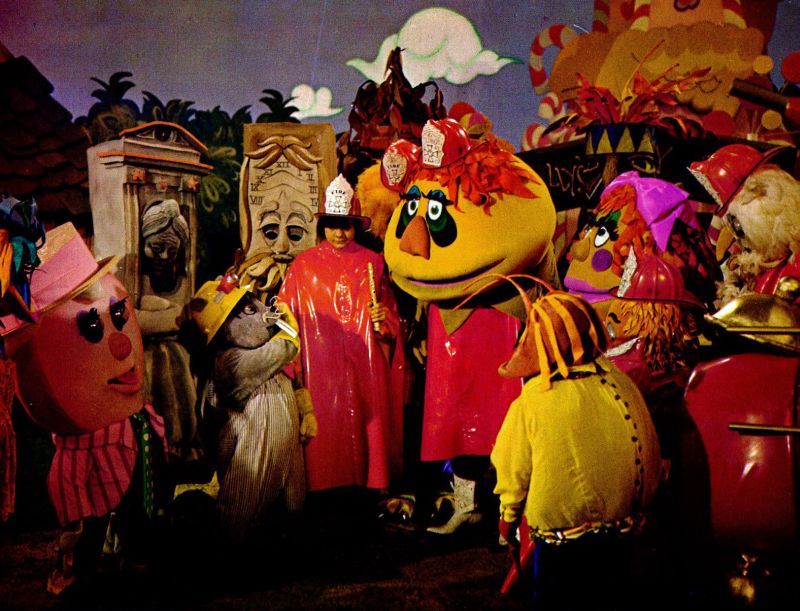
Without Sid and Marty Krofft the ’60s and ’70s would have been much less colorful. The brothers produced trippy Saturday morning kids’ shows like Sigmund and the Sea Monsters, Lidsville and H.R. Pufnstuf. They were mind-bending romps with wild fluorescent puppet characters that looked like hip castoffs from McDonald’s-land and a psychedelic sensibility that had more to do with Reefer Madness than Captain Kangaroo.
Not that I knew that at the time. Later when I realized H.R’s surname was pronounced “puffin’ stuff” the hallucinogenic humor of the show made (slightly) more sense.
The Kroffts were best known for their insane puppet shows, but among their other credits were fantasy series like Land of the Lost, which gets the big screen treatment this weekend. If it’s a hit expect more shows from the Krofft vault to make the leap to theatres.
“I think a number of our titles are conducive to film,” says younger brother Marty, “Like Lidsville, Electra Woman and Dyna Girl; I know there is a big star that wants to be Electra Woman.”
This isn’t the first time the Kroffts have dabbled in film. In 1970 the brothers produced a theatrical version of the H.R. Pufnstuf television show. Simply titled Pufnstuf, it centred around Jimmy (Jack Wild), his magical talking flute, Freddy, and Jimmy’s old foe Witchiepoo (Billie Hayes) who tries to steal the flute and win the Witch of the Year Award.
It’s not Dostoevsky, but Witchiepoo and her Vroom Broom is worth a search on YouTube. (If they bring Pufnstuf back to the big screen Marty already knows who he wants to play Witchiepoo. “How great would Johnny Depp be as Witchiepoo?” he says.)
If Pufnstuf was Cheech and Chong for kids their next movie was John Waters-lite.
Shot in 1978, Side Show is a demented little flick that didn’t see the light of day until 1981. Directed by William Canon Conrad this strange piece of celluloid is a murder mystery set against the backdrop of a circus.
The Kroffts and Conrad almost outdo Tod Browning’s Freaks, bringing together a collection of actual side show performers to add a sense of eccentric authenticity to the picture.
Side Show was a flop, but that didn’t slow down the brothers. They have been producing television and movies for almost five decades with no end in sight. As Disney chief Michael Eisner said, “The Kroffts always have one more show in them.”
In Drag Me to Hell director Sam (Spiderman) Raimi returns to his horror roots, reviving a dormant fright genre — the curse film.
There was a time on the big screen when old crones and evil wizards terrorized movie goers with spells, and I don’t mean the cute and cuddly curse of Shrek, I mean heavy hexes like the Maloika and Voodoo juju.
In 1996 a film based on a novel from Stephen King’s alter ego Richard Bachman called Thinner offered a supernatural alternative to Weight Watchers. The story centred on Billy Halleck (Robert John Burke), a sleazebag lawyer charged with vehicular manslaughter after running down an old woman.
The obese legal wiz beats the charge in court, but a far worse verdict awaits him outside the courtroom. Minutes after he is set free a 106-year-old gypsy named Tadzu Lemke (Michael Constantine) touches him, whispering the word “thinner” in his ear.
From then on, Halleck sheds pounds faster than you can say “Jenny Craig.” Using all his lawyerly skills of persuasion he convinces Lemke to lift the curse, but the resolution has tragic consequences for those around him.
A different kind of curse was unleashed in the 2003 Japanese J-Horror film Ju-on: The Grudge. The movie is only occasionally scary, but the idea of a curse, born of great violence, that continues to grow like a virus and visit terror on everyone who comes into contact with it, is undeniably creepy.
Probably the only curse film to be deemed “culturally, historically, or aesthetically significant” by the United States National Film Registry is Walt Disney’s animated Beauty and the Beast. The story begins with an old beggar woman asking a handsome but spoiled prince for shelter against the bitter cold.
Repulsed by her appearance he refuses her request and payment of a rose. She warns the prince not to judge people by their appearances but he is unmoved. Unmoved, that is until she lays the kavorka on him, turning him into a hideous beast.
The curse, she says, can only be lifted if “he could learn to love another, and earn her love in return” by the time his twenty-first birthday came around and the last petal of woman’s enchanted rose fell to the ground.
Despite their differences in topic and setting these movies all boil down to one universal theme: Lack of respect has consequences. Think of that the next time a 106 year-old witch asks for a favour.
If not for the success of Twilight, a movie called Little Ashes about superstar surrealist Salvador Dalí’s relationship with poet Federico García Lorca would likely have languished on the shelf, never to be seen in theatres.
So why is it coming to some theatres this weekend? Well, Little Ashes stars a pre-Twilight Robert Pattison as Dalí in a role decidedly different from the one that made him a star and the film’s producers are hoping to cash in on his newfound popularity.
Pattison joins the list of actors to have films come back from the dead to haunt them. Matthew McConaughey and Renee Zellweger purportedly took legal action to prevent the re-release of a skeleton from their collective closets, Texas Chainsaw Massacre: The Next Generation and if Nicole Kidman didn’t try and buy up all the copies of BMX Bandits, she should have.
In 1979, Madonna starred in the erotic thriller A Certain Sacrifice as Bruna, a Lower East Side local rooming with three love slaves who help her get revenge on a man who attacked her. Shot on a budget of $20,000 US, the film was forgotten until 1985 when it was released on VHS to coincide with the release of Like a Virgin.
Unhappy about this relic from her past popping up, she screamed obscenities at director Stephen Jon Lewicki, called the film “mediocre” and her performance “second rate.”
Lewicki declined the singer’s $10,000 buyout to keep the film off video store shelves and became a millionaire on the film’s proceeds.
Sylvester Stallone had a similar experience. As a starving actor, he appeared in a sexploitation movie called Party at Kitty and Studs. “I played Studs, who posts a sign on a bulletin board inviting people to come to a party,” he told Playboy.
“About ten people show up and they do a lot of kissing and necking, and that’s about it.”
He says he was literally a starving artist when he made the film. “I mean, I was desperate. That’s why I thought it was extraordinary when I read in one of the trade papers that I could make $100 a day. And the fact that I had to take off my clothes to do it was no big deal.”
Years later when offered the chance to buy the rights and keep the movie out of the marketplace Stallone said no and since then has developed a sense of humour about his embarrassing porn legacy.
When asked about “remake fever” in Hollywood, he said: “My real dream is that the highest-priced actor working today has the huevos to remake the classic Party at Kitty and Studs.”
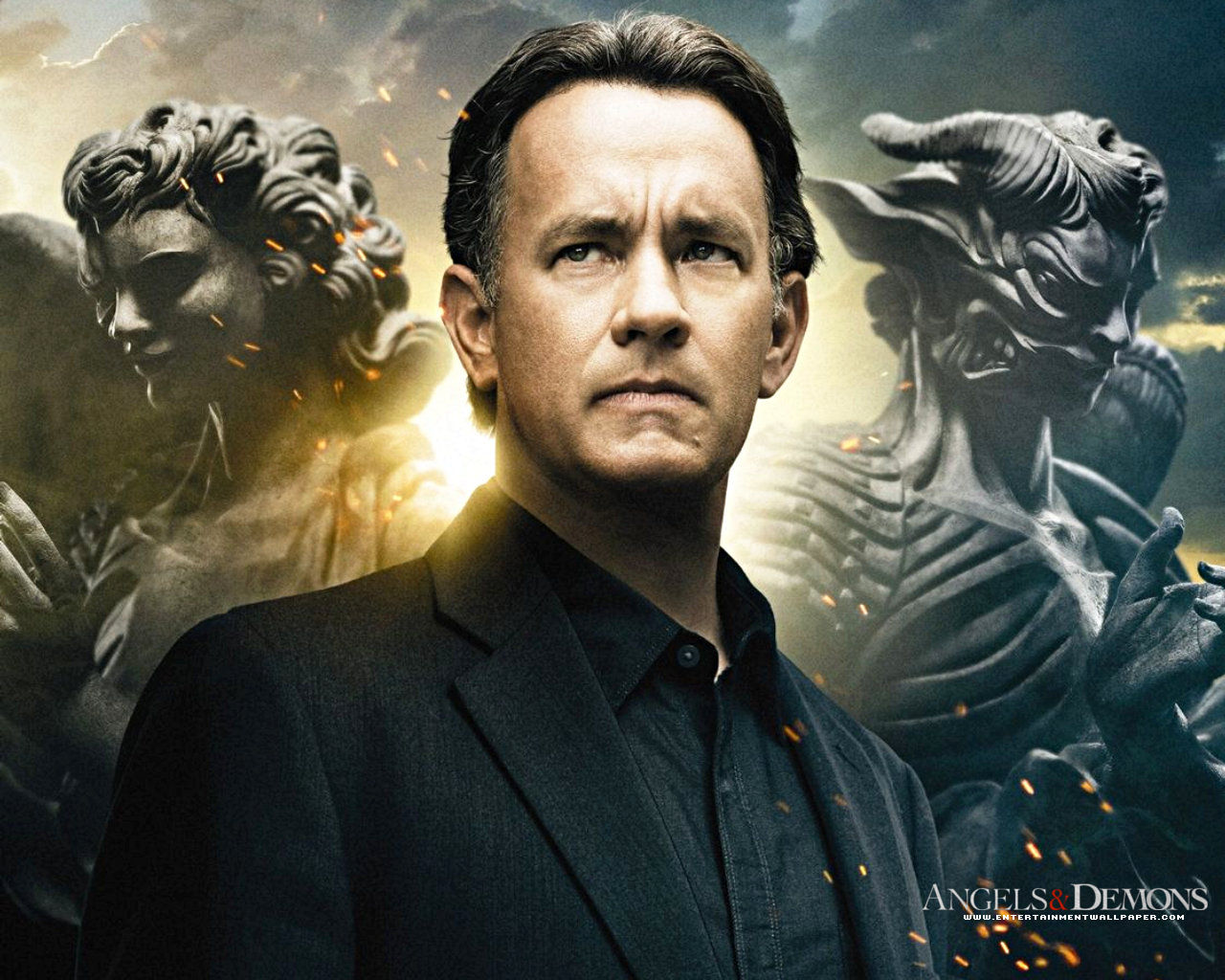
Catholic League boss William Donohue doesn’t want you to see the sequel to The Da Vinci Code. In a booklet titled Angels & Demons: More Demonic than Angelic, he accuses director Ron Howard of “smearing the Catholic Church.” He’s not alone. Hindu scholars have condemned the movie for “playing with the sentiments of the faithful for mercantile greed” and Vatican officials were purportedly considering a ban of the film.
Howard, usually the most non-contentious of Hollywood directors, seems to be treading on Oliver Stone territory here. He shot back at Donohue in the Huffington Post. “Let me be clear,” he wrote, “neither I nor Angels & Demons are anti-Catholic,” but deep down I think he knows a little uproar can be good for business.
History shows us that movies have courted controversy since the very beginning.
The 1896 film The Kiss rode reviews like, “The spectacle of the prolonged pasturing on each other’s lips was beastly enough in life size on the stage but magnified to gargantuan proportions … it is absolutely disgusting,” to the top of the box office.
Half a century later, another Howard, this time Howard Hughes, directed a movie thought to be so salacious that its “assault on decency” saw several theatre owners arrested for unspooling it.
Completed in 1941, The Outlaw was such a hot potato it didn’t see general release until 1946.
Officially the film is about Doc Holliday and Billy the Kid’s feud over a woman called Rio, but informally it’s about something else entirely — star Jane Russell’s chest. Hughes was so smitten with Russell’s deep cleavage he showcased it in the film and even had a special cantilevered bra designed to enhance the appearance of her 38D bust.
The emphasis on her breasts was too much for the Hollywood Production Code Administration, who demanded changes to the film.
Hughes balked, becoming the first American filmmaker to defy the Production Code and use the resulting hullabaloo to lure audiences into theatres.
The thing that binds all of these movies is controversy. Without it we may never have heard of The Kiss, The Outlaw or even Angels & Demons. In fact, Ron Howard should be dropping Donohue a thank-you note for all the free publicity his campaign against the film has generated.
After all, it was essayist William Hazlitt who said, “When a thing ceases to be a subject of controversy, it ceases to be a subject of interest.”